How to Spot Anomalies in Animal Hospital
A step-by-step workflow for spotting every Anomaly in Animal Hospital using in-person, camera and photo checks — and exactly when to hit the Shutter.
Last updated: June 19, 2026
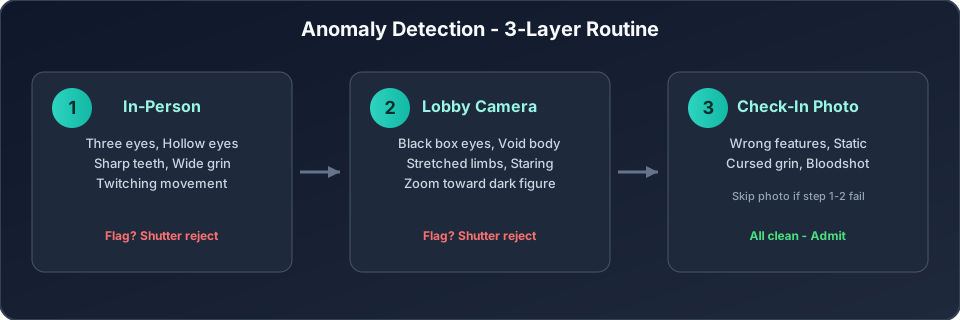
Spotting Anomalies is the core skill of Animal Hospital, and the good news is that it is a routine, not a reflex. If you run the same three checks on every single patient, in the same order, you will catch nearly everything the game throws at you. This guide is that routine, step by step.
Step 1: Read the patient in person
Before you touch the camera or the photo button, just look. The in-person visual signs are the fastest tells in the game and cost you nothing:
- Three eyes or any wrong eye count
- Hollow eyes — empty, dark sockets
- Sharp teeth or realistic, human-like teeth on an animal
- An unnaturally wide grin
- Twitching or jittery, broken movement
If you see even one of these, you are done — hit the red Shutter button on the left of your desk and reject them. You do not need a photo, and you should not take one, because some photos cost you Sanity. Visual signs are not always present, though, so a clean look just means you move to step 2.
Step 2: Check the lobby and check-in cameras
If the patient looks normal up close, pull up the CCTV feeds before they reach the desk. Camera anomalies are tells that only exist on the screen:
- A black box over the eyes
- Limbs stretched and distorted
- Hollow eyes (same as the in-person tell)
- The patient staring directly into the camera
- A body that is completely blacked out into a void
- Twitching, a distorted jaw, or different ears, nose and mouth than you saw in person
- The camera zooming toward a dark figure near your booth
If any of these appear, reject the patient the moment they reach the check-in window. One special warning: the camera zoom toward a dark figure actively drains your Sanity and can be fatal if you keep watching — look away from the camera immediately when it happens.
Step 3: Take and read the photo
Only patients who pass both earlier checks reach this step. Photograph them at the check-in desk and study the result for photo anomalies:
- Incorrect photo — the eyes, ears, mouth or other features in the photo do not match the patient standing in front of you
- Static photo — a grainy, noisy image
- Cursed photo — bloodshot eyes and a grin
Any of these means reject. Be aware that looking at a cursed photo damages Sanity no matter what, which is the whole reason you check eyes and camera first: if you already have a reason to reject, never take the photo.
Step 4: Admit with confidence, or reject
After the three checks you will be in one of two states. If a check flagged a problem, reject with the Shutter — no hesitation. If all three checks are clean, admit the patient and move them into treatment. This is a confident admit based on evidence, not a gamble. Rejecting genuine patients lowers your score and cash, so resist the urge to panic-reject just because a patient looks creepy; creepy is the art style, anomalous is the tells above.
Step 5: Plan for the ones that slip through
Even with a perfect routine, events like the Ambulance rush can force Anomalies inside automatically. So always keep a plan for cleanup: carry a taser or gun, and remember you can let a missed Anomaly die during treatment by giving it the wrong item without losing points. See the Skinwalkers guide for combat details.
Turn the routine into muscle memory
The reason this works is consistency. Run all three checks on every patient, even the ones that look obviously fine, because the game rewards patience and punishes assumptions. Keep a mental list of every Anomaly you catch and what tipped you off — the specifics change, but the categories of tells repeat. Within a few shifts, the routine becomes automatic and you will be rejecting Skinwalkers before you have consciously registered why. From here, deepen each layer with the visual signs, camera and photo guides, and check the Tier List to prioritize the most dangerous misses.
Frequently asked questions
What is the fastest way to spot an Anomaly?
Look at the patient in person first. In-person visual signs — three eyes, hollow eyes, sharp or realistic teeth, a wide grin, twitching — are instant and free, so you can reject the obvious monsters before spending time on cameras or a photo.
Do I need to take a photo of every patient?
No. Only take a photo when the in-person and camera checks both come up clean. If you already saw a visual sign, reject immediately and skip the photo — cursed photos drain Sanity, so there is no reason to look at one once you are already sure.
Can a patient be an Anomaly with no visible signs at all?
Yes. Some Anomalies only break on the camera, and a few only break in the photo. That is exactly why the three-layer routine exists: each layer catches a class the others miss.
What if I am not sure after all three checks?
If all three checks are genuinely clean, admit the patient — that is a confident admit, not a guess. Rejecting clean patients costs score. Trust the routine instead of second-guessing.